
From Shared Hosting to Managed Cloud: Why the Switch is Worth It
August 26, 2025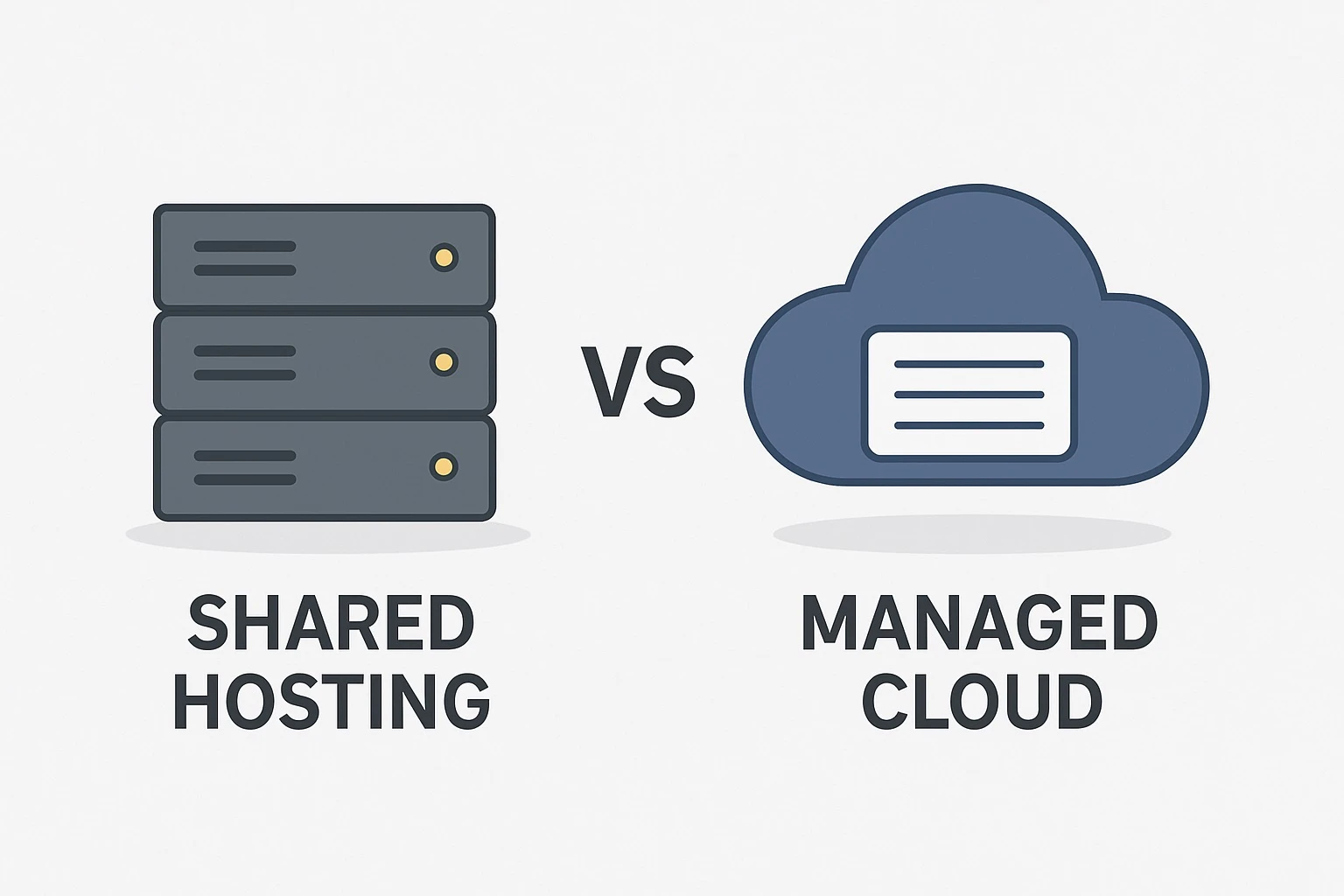
Our cloud offers everything your web application needs. You can combine different services and also use external cloud services.
Whether PHP, Laravel or containers. The platform runs every stack, including scaling, TLS, backups and monitoring.
Your WordPress site is painfully slow - again. Your Laravel app crashed under a sudden wave of visitors. Support from your shared hosting provider ends with: "Consider upgrading to a more powerful plan." Sound familiar?
For many developers, digital agencies, and SaaS founders, this scenario is all too common. What once seemed like a cost-effective hosting solution now feels like a bottleneck. That’s where managed cloud comes in - not just as an upgrade, but as a smarter, more scalable foundation for modern web applications.
Shared hosting is exactly what it sounds like: multiple websites hosted on the same physical server, sharing the same pool of resources—CPU, RAM, storage, and bandwidth. For the hosting provider, it's an efficient business model. For developers with dynamic, growing applications… not so much.
The downsides are hard to ignore:
Shared hosting once suited small blogs and portfolios. But if you're running business-critical applications, it's probably holding you back.
Managed cloud combines the power of cloud infrastructure with expert, hands-on management. Unlike basic VPS or cloud server rentals, a managed cloud platform doesn’t just give you raw infrastructure—it manages everything for you.
This means:
In short: you focus on your code; the platform takes care of the infrastructure.
With managed cloud, your application runs on isolated resources optimized for performance. Unlike shared hosting, no one else can affect your CPU or memory.
Need to scale up during a product launch or flash sale? Managed cloud lets you scale vertically or horizontally in minutes—and back down again afterwards.
Managed cloud platforms offer regular patching, firewall management, DDoS protection, and automated backups. Compliance with standards like GDPR is easier to maintain.
Choose your PHP version, install server extensions, and configure your environment how you need. It’s not one-size-fits-all anymore.
Features like staging environments, Git deployments, and built-in CI/CD pipelines make developer workflows faster and safer. No hacking around .htaccess just to deploy safely.
We migrated our agency’s client apps to managed cloud and saw immediate performance gains—plus peace of mind knowing everything’s being monitored and updated.
— Sara M., CTO at a digital agency
If any of these sound familiar, it’s time to explore a better hosting approach.
Concerned about the process of migrating to managed cloud? You’re not alone. Common myths include:
A good managed cloud platform doesn’t just provide tech—it guides you through onboarding and ensures a smooth handoff from your old host.
Shared hosting was a stepping stone for many projects—but modern web applications demand more. From performance and flexibility to security and scalability, managed cloud offers a fundamentally better experience for today’s sites and apps.
For teams building in Laravel, WordPress, or custom stacks, it's the logical step forward: a platform that grows with you, without the DevOps headaches.
Ready to make the move? Explore how LAY7 cloud can help you scale from stressed to streamlined with our managed cloud solution tailored for web applications.