
From Idea to Web Application: How to Plan and Build a Project from Scratch
September 1, 2025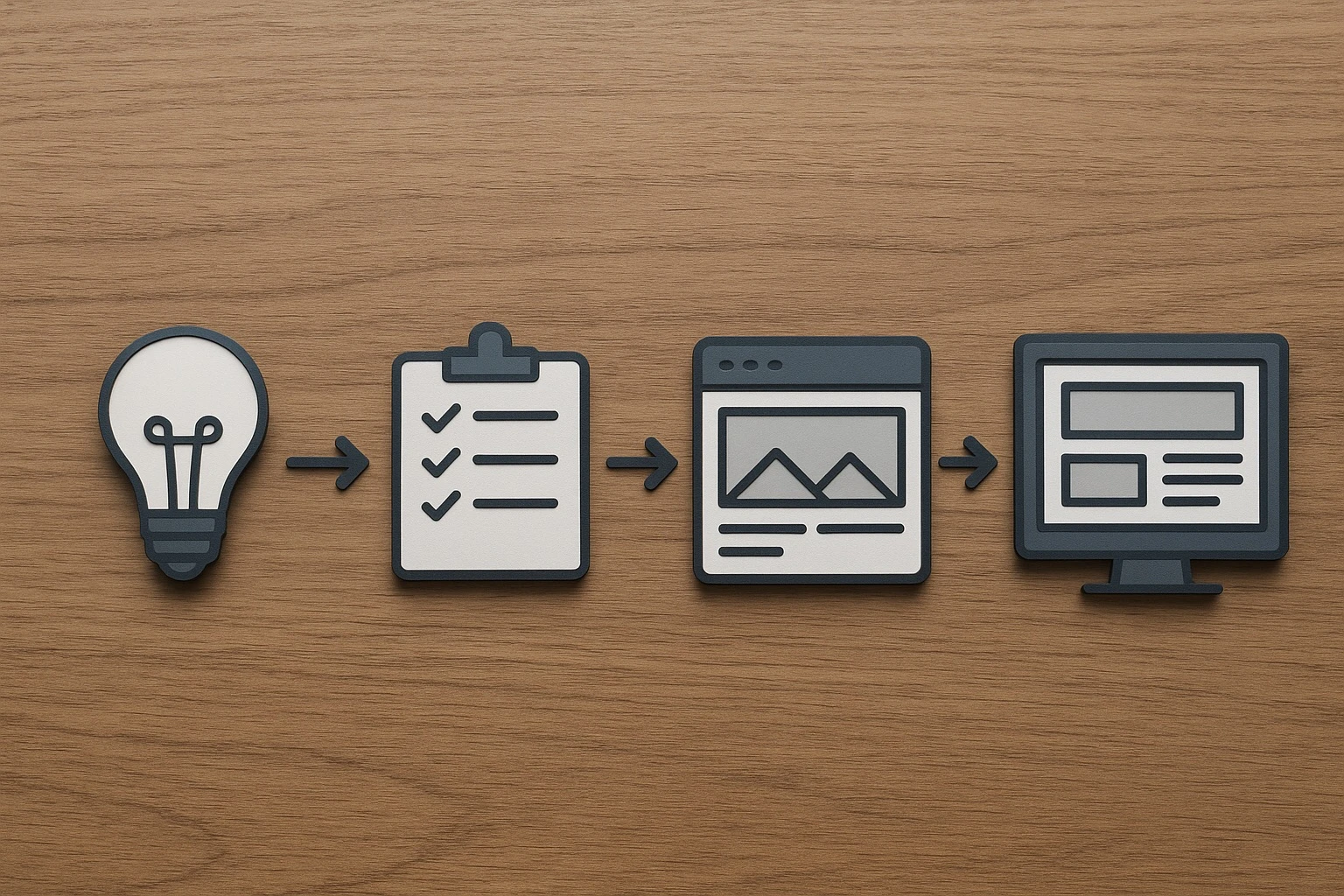
Our cloud offers everything your web application needs. You can combine different services and also use external cloud services.
Whether PHP, Laravel or containers. The platform runs every stack, including scaling, TLS, backups and monitoring.
Whether you're a startup founder, a solo freelancer, or a developer building your next big side project, getting from a raw idea to a functioning web application can feel overwhelming. But with the right roadmap, it becomes a structured, exciting journey — and that’s exactly what we’re laying out here.
This step-by-step guide will help you transform your concept into a live MVP, ready for real users, feedback, and growth.
Everything starts with clarity. Before you write a single line of code, answer these three questions:
Write down a one-sentence pitch. If you can’t describe the core idea in one neat sentence, it’s not yet clear enough.
If you can’t describe what you are doing as a process, you don’t know what you’re doing.
— W. Edwards Deming
A great idea still needs validation. Research tools like Google Trends, Reddit, or niche communities can help you understand if the problem exists widely enough. Once you’ve gauged market interest, start validating with real humans — preferably your ideal target users.
Remember, the MVP is not about launching something perfect. It’s about solving one core problem well.
Making tech stack choices too early or lightly is a common pitfall. Think long-term while balancing the need to move fast. Consider:
At this stage, simplicity usually wins. Choose the stack you or your team is most comfortable with.
npx create-next-app@latest my-app
cd my-app
npm run dev
For instance, the modern Jamstack ecosystem — using frameworks like Next.js with a backend-as-a-service — can be an excellent choice for fast MVPs, depending on your use case.
Good design speaks to function. You don’t need a UI/UX degree to get started. Instead, focus on:
Test your wireframes with potential users. Observe where they hesitate or get confused — and fix it now, before coding begins.
Once you're ready to build, start with one small, testable user journey. For example: “A user can create an account and save one item.”
Stay lean. Focus on core functionality and build incrementally.
git init
git add .
git commit -m "Initial commit"Don’t wait for perfection. Once your MVP is usable — even in a rough state — put it live. Use a managed cloud environment that allows you to deploy quickly without worrying about low-level server setups.
Then iterate. Fix what's broken. Improve what’s useful. Remove what’s not used.
Once feedback starts coming in, your roadmap will shift—and that’s a good thing. Consider these next steps:
Every successful app went through early awkward phases. What matters is that you're moving, improving, and listening.
The secret to getting ahead is getting started.
— Mark Twain
From first spark to live MVP, the journey to launching a web application takes clarity, consistency, and action. Start small, listen to users, and iterate fast. Don't overthink it — you learn by doing.
Use validation, lean design, and a managed cloud environment to accelerate your build and get real-world feedback sooner.
Now that you have a plan, go build something great.